Green hydrogen becomes a reality
Who’s going to make the first move: the client or the manufacturer? This is the question hindering the ramp-up of the hydrogen industry. Salzgitter Flachstahl and EWE have now solved this dilemma by signing a trailblazing major purchase agreement: as of 2030, 10,000 metric tons a year will be used in virtually climate-neutral steel production.
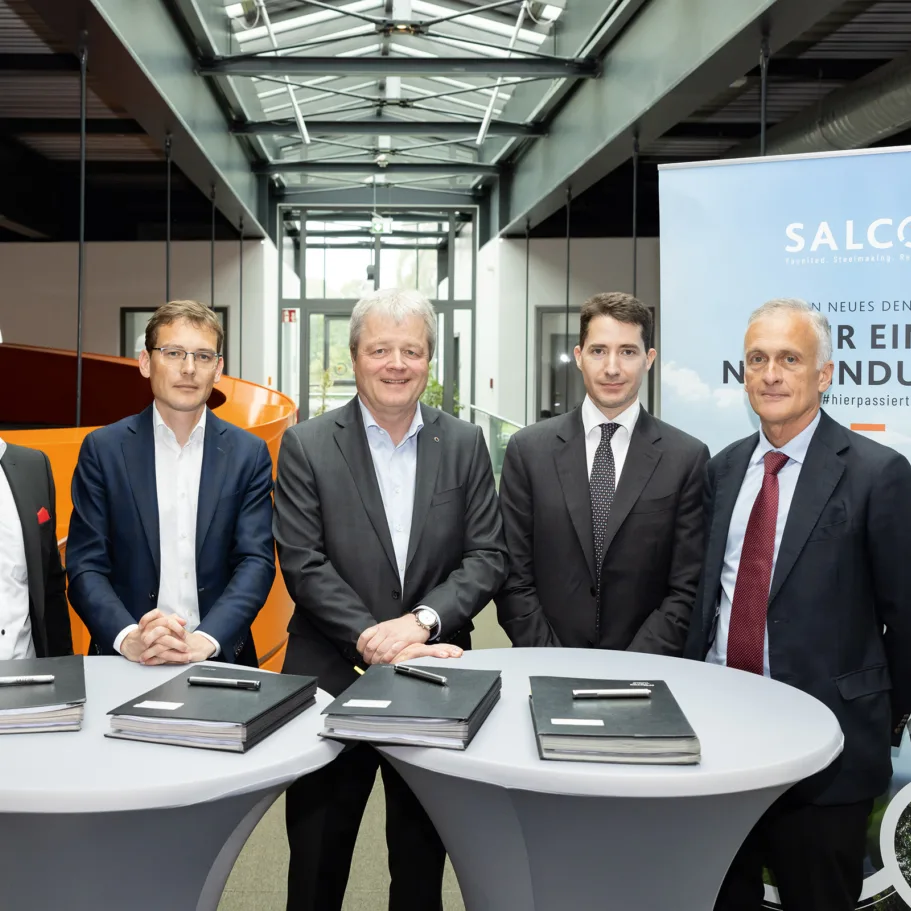
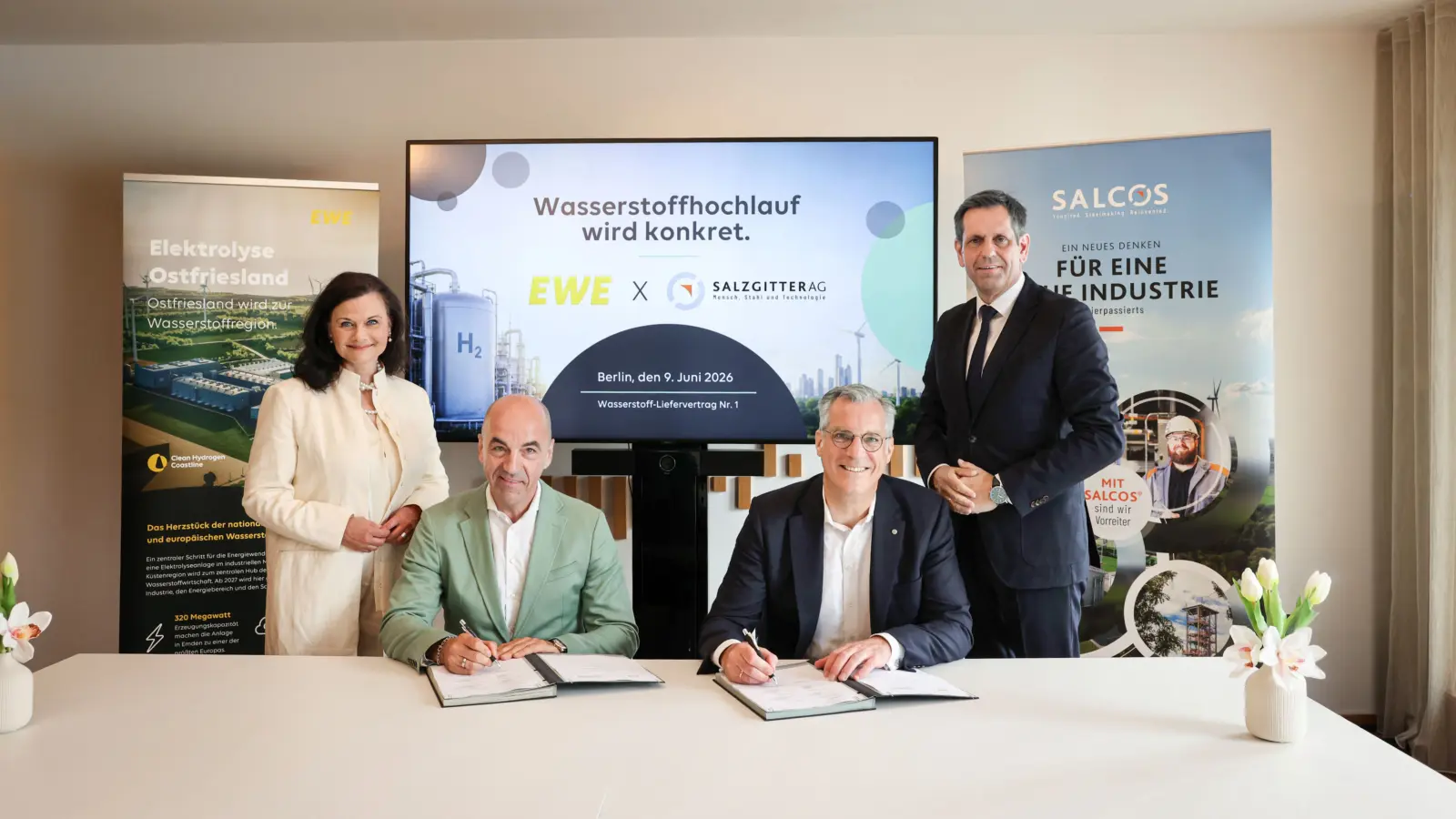
It’s a double first: Salzgitter Flachstahl, a subsidiary of the KHS Group parent Salzgitter AG, and energy service supplier EWE, recently signed a long-term supply contract for green hydrogen in Berlin. For EWE, this is the first major purchase agreement for the 320-megawatt production plant in Emden; for Salzgitter, this is their first ever major contract with a hydrogen supplier. As of 2030, around 10,000 metric tons of green hydrogen per year will be supplied to Salzgitter.
Key asset for SALCOS®
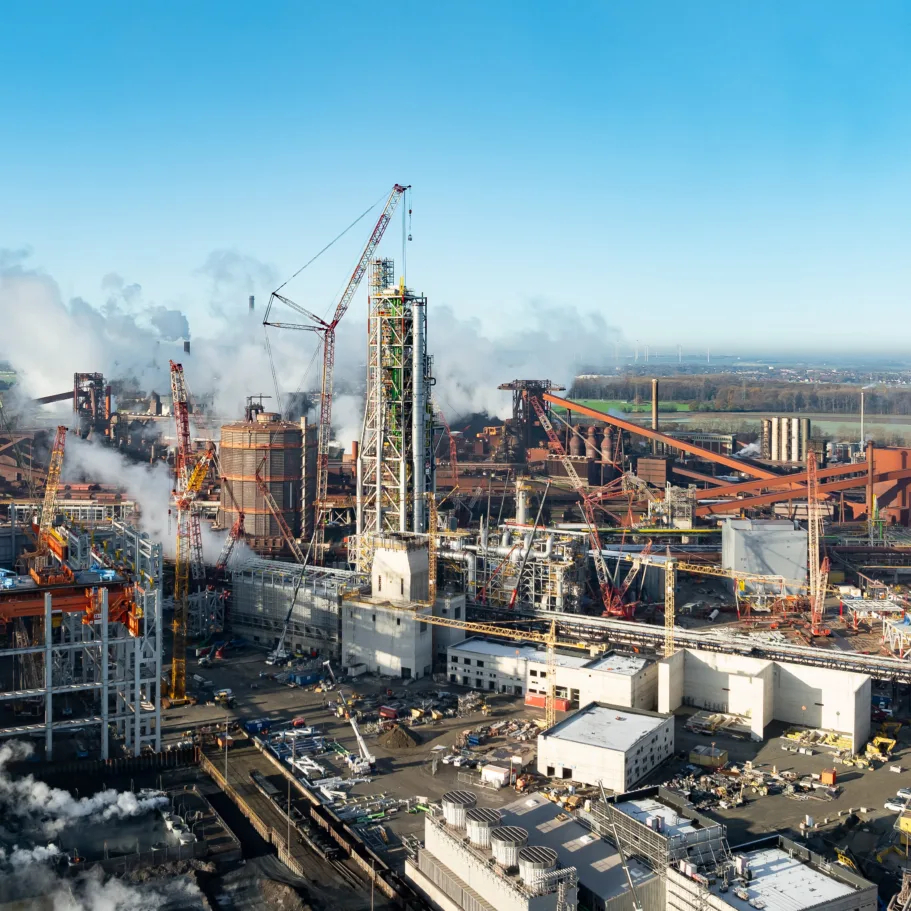
The green hydrogen procured is to be used for SALCOS® – Salzgitter Low CO2 Steelmaking. Operating a direct reduction plant with natural gas can cut carbon emissions by 60% compared to the blast furnace route with coal and coke; however, the long-term target of virtually climate-neutral steel production can only be achieved using green hydrogen. The plant can process up to 150,000 tons of hydrogen per year; the EWE contract covers about 6.5% of this requirement. In the future, Salzgitter AG will itself produce almost 9,000 tons at its own 100-megawatt electrolysis plant on its steelworks site.
“This agreement is the first to combine production, the future core H2 network and industrial demand on a large scale,” says Gunnar Groebler, CEO of Salzgitter AG. “The contract with EWE strengthens our role as a frontrunner in the transformation of the steel industry.”
“With this contract, we’re sending out a strong signal promoting the ramp-up of Germany’s hydrogen economy and securing an essential resource for SALCOS® as of 2030.”
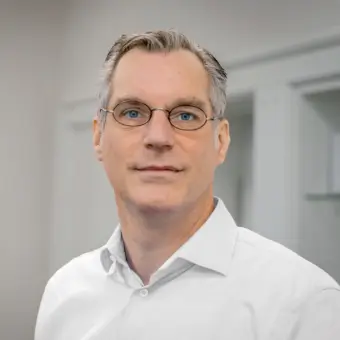
CEO of Salzgitter AG
Momentum for the market
Both partners are forging ahead well before the hydrogen energy economy is fully established. So that individual projects can become a viable market, reliable, cost-effective conditions must be created: these include competitive electricity prices, practicable rules for green hydrogen (RFNBO1) as well as lead markets that permit investment in large-scale storage facilities and infrastructure. Both companies are therefore campaigning for longer transition periods and more flexible electricity regulations.
“Without initial supply contracts, no German hydrogen economy will develop,” claims Groebler. This contract will otherwise remain an exception, he continues. EWE CEO Stefan Dohler also realizes that the market is still in its infancy. “This agreement is a milestone – but not yet the goal.”
1. RFNBO = Renewable Fuels of Non-Biological Origin.