New landmark
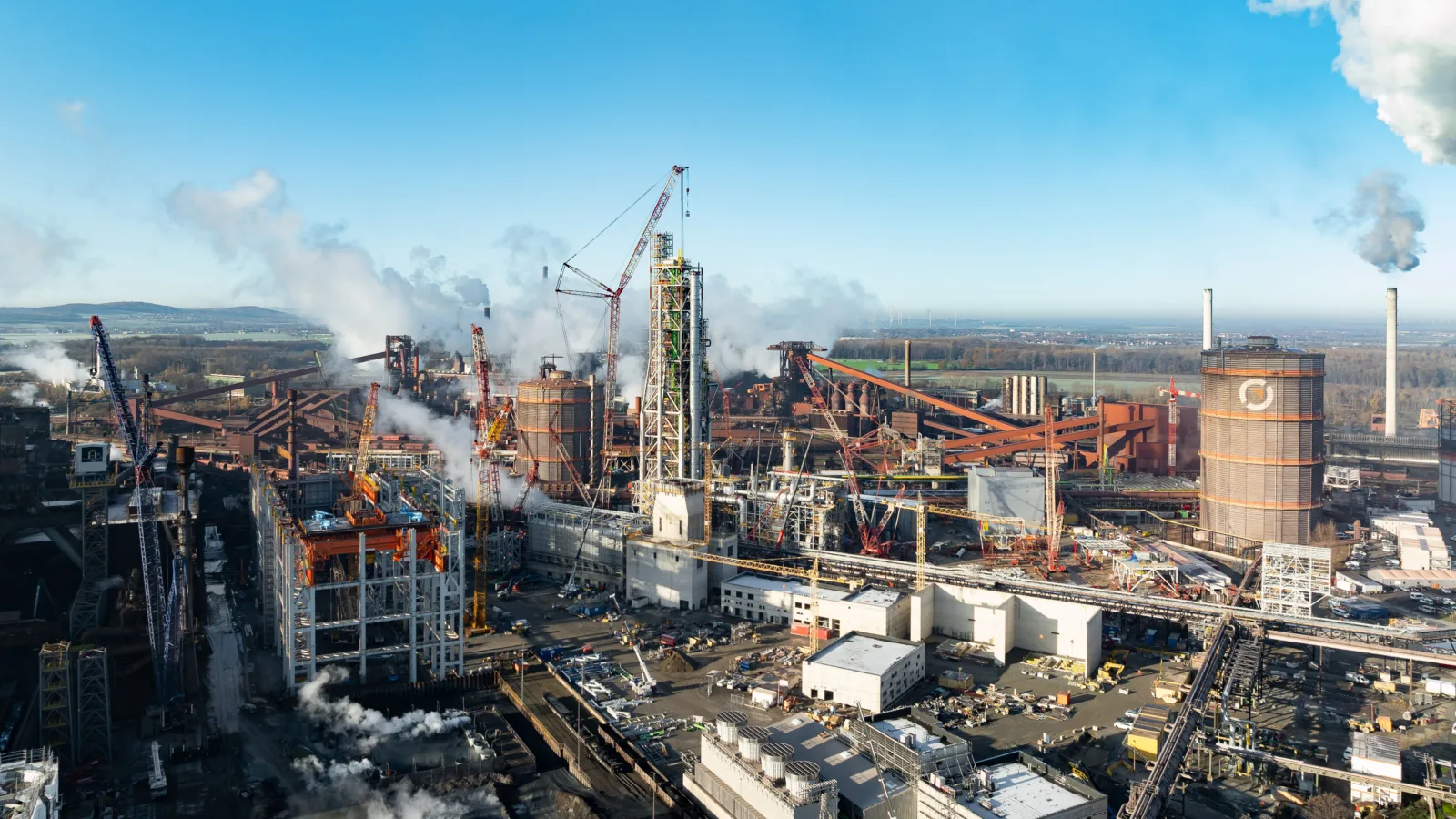
One sign of progress visible for miles in the move towards climate-friendly steel production is the steel construction of the direct reduction plant reactor tower in Salzgitter, completed at the end of 2025. From 2027, water will be generated here instead of CO₂ in the manufacture of intermediate product iron sponge.
Standing at an impressive 140 meters, the new direct reduction plant at KHS’ parent company Salzgitter AG reached its final height in December 2025. This makes the plant’s reactor tower the highest building on the company premises. It also dominates the skyline of Salzgitter as a technological landmark symbolizing more climate-friendly steel production.
Green steel
In the classic blast furnace, iron ore is smelted into liquid pig iron with the help of coking coal. This process generates large amounts of greenhouse gases. Under its SALCOS® program (Salzgitter Low CO₂ Steelmaking), Salzgitter is in the midst of its transformation to virtually CO₂-free steel production.
In the SALCOS® route, oxygen is removed from the iron ore pellets in the direct reduction plant using natural gas and, increasingly, hydrogen. This takes place at much lower temperatures without the need for smelting. Iron sponge is produced as an intermediate product that’s also known as direct reduced iron (DRI). This porous material is subsequently further processed together with steel scrap in an electric arc furnace to create crude steel.
“The SALCOS® construction site that is growing every single day shows us just how far we’ve come in our transformation and implementation of SALCOS® stage 1.”
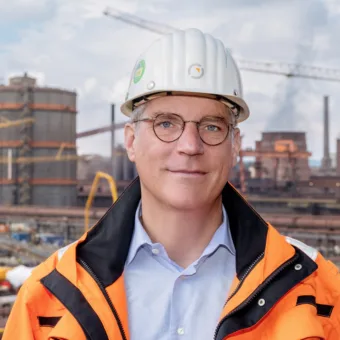
CEO, Salzgitter AG
Use of gravity
The impressive height of the plant isn’t just a show of architectural prowess; it has a specific technical purpose. Through the use of gravity, the iron ore pellets pass through the process without the need for mechanical drives, thus achieving an optimum residence time in the reactor. This process is the key to climate-friendly steel production. To put it simply, instead of CO₂, reduction with hydrogen produces water that can be partially reused in the integrated process.
Great things afoot
“Looking at the SALCOS® construction site that is growing every single day shows us just how far we’ve come in our transformation and implementation of SALCOS® stage 1. There are great things afoot,” smiles Gunnar Groebler, CEO of Salzgitter AG. The now completed steel construction of the reactor tower is a key milestone for SALCOS® and sends out a clear signal: the era of low CO₂ steel production is drawing closer. Green steel is scheduled to go into production as soon as 2027. By the mid-2030s, steelmaking is to be fully converted to the SALCOS® route and CO₂ emissions cut by 95%.